This website uses cookies

Ce site web utilise des cookies pour garantir son bon fonctionnement. En outre, avec votre consentement, nous pouvons utiliser les cookies pour collecter des informations sur l'utilisation du site web afin de l'améliorer en permanence. En cliquant sur le bouton « Autoriser uniquement les cookies essentiels », vous refusez l'utilisation de cookies autres que ceux qui sont strictement nécessaires. En cochant les cases « Statistiques » et « Marketing » et en cliquant sur le bouton « Autoriser la sélection », vous acceptez l'utilisation d'autres cookies. En cliquant sur le bouton « Accepter tous les cookies », vous acceptez tous les cookies essentiels, marketing et statistiques. Vous trouverez des informations détaillées sur les différents cookies dans la politique de confidentialité. Vous pouvez révoquer votre consentement à tout moment en cliquant sur le bouton « Paramètres des cookies » en bas à gauche.


Essential cookies enable basic functions and are necessary for the website to function properly.
Statistics cookies collect information anonymously. This information helps us to understand how our visitors use our website.
Marketing cookies are used by third parties or publishers to display personalized advertisements. They do this by tracking visitors across websites.


Protecting Fare Revenue. Strengthening Trust in Public Transport

|   Fare-Collection-Systems

Fare evasion is more than a loss of revenue – it can undermine fairness, passenger confidence and the long-term sustainability of public transport.

While fare evasion can happen for many reasons, the financial impact is often driven by a smaller group of chronic offenders who deliberately exploit weaknesses in existing systems.

In cities such as Melbourne, New York, London and Toronto, the resulting losses demonstrate why revenue protection has become a strategic priority for transport operators.

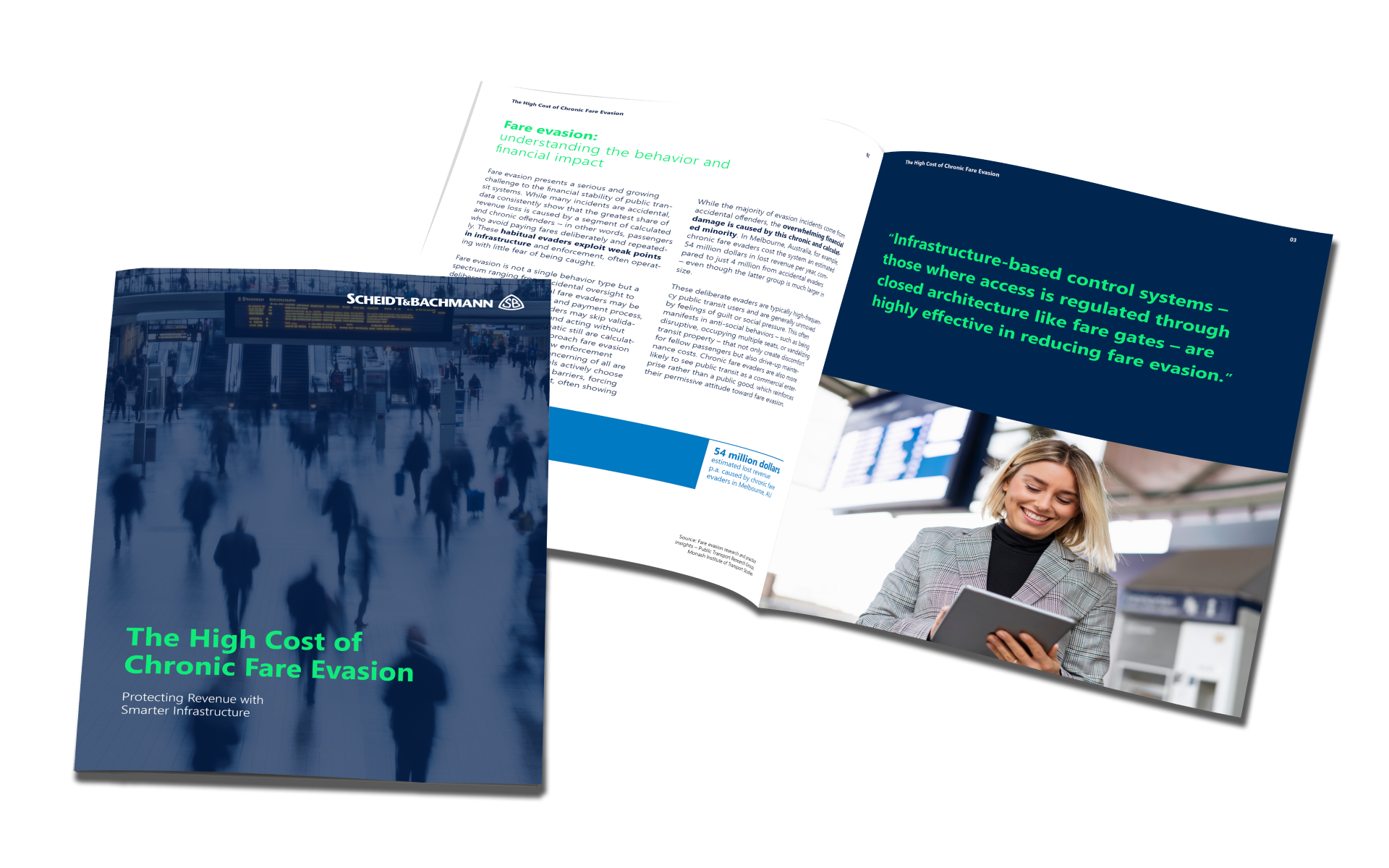
Our whitepaper, “The High Cost of Chronic Fare Evasion,” explores how transport agencies can respond with a combination of smarter infrastructure, inclusive design and complementary measures.


Inside, you’ll discover:

- Why chronic fare evasion creates a disproportionate financial impact
- How closed fare collection systems can strengthen revenue protection
- Why modern fare gates need to balance security, accessibility and passenger flow

Protecting fare revenue is not just about preventing losses. It is about safeguarding trust in public transport and ensuring that honest passengers are not disadvantaged.


Click here to download the white paper “The High Cost of Chronic Fare Evasion” and learn how smarter infrastructure can help build safer, more inclusive, and sustainable transportation networks.


Contactez-nous

Les champs marqués d'une * sont obligatoires